Spoiler Alert: This article reveals plot details. If you aren't familiar with the work yet, you should probably stop reading now.
This episode was a massive undertaking. It was originally supposed to be the second episode of the series. In the end, it became number seven.
I am a huge fan of Sherlock Holmes, and indeed a lot of inspiration from it went into this project, starting with Dian as the narrator (like Doctor Watson) and Miray as the mysterious heroine (like Sherlock Holmes).
So what could be more obvious than setting a detective episode in Victorian London?
I had expected a lot of things. What I didn’t expect was that my main characters would boycott the story.
The episode presented here is the fourth attempt. There are actually three other versions, all more or less fully written. In one, a thief returned an item instead of stealing it. In another, a statue disappeared without a trace from a museum right before the cleaner’s eyes. In yet another, a painting also vanished as if by magic – but no one could be found who had a good motive.
Only this fourth attempt here succeeded. Because only now did I understand what made the previous attempts fail.
It wasn’t the plot. The ideas were good and had potential.
It was that I desperately wanted to force Miray and Dian into the roles of Holmes and Watson. I wanted to create an imitation of Doyle’s stories. My characters fought against it. They acted unmotivated, colourless, moody.
Only when I let them be themselves again did it finally work.
The Plot
Miray runs a detective agency in Victorian London; Dian is her partner. They receive a visit from Mr Wellington, the owner of an insurance company.
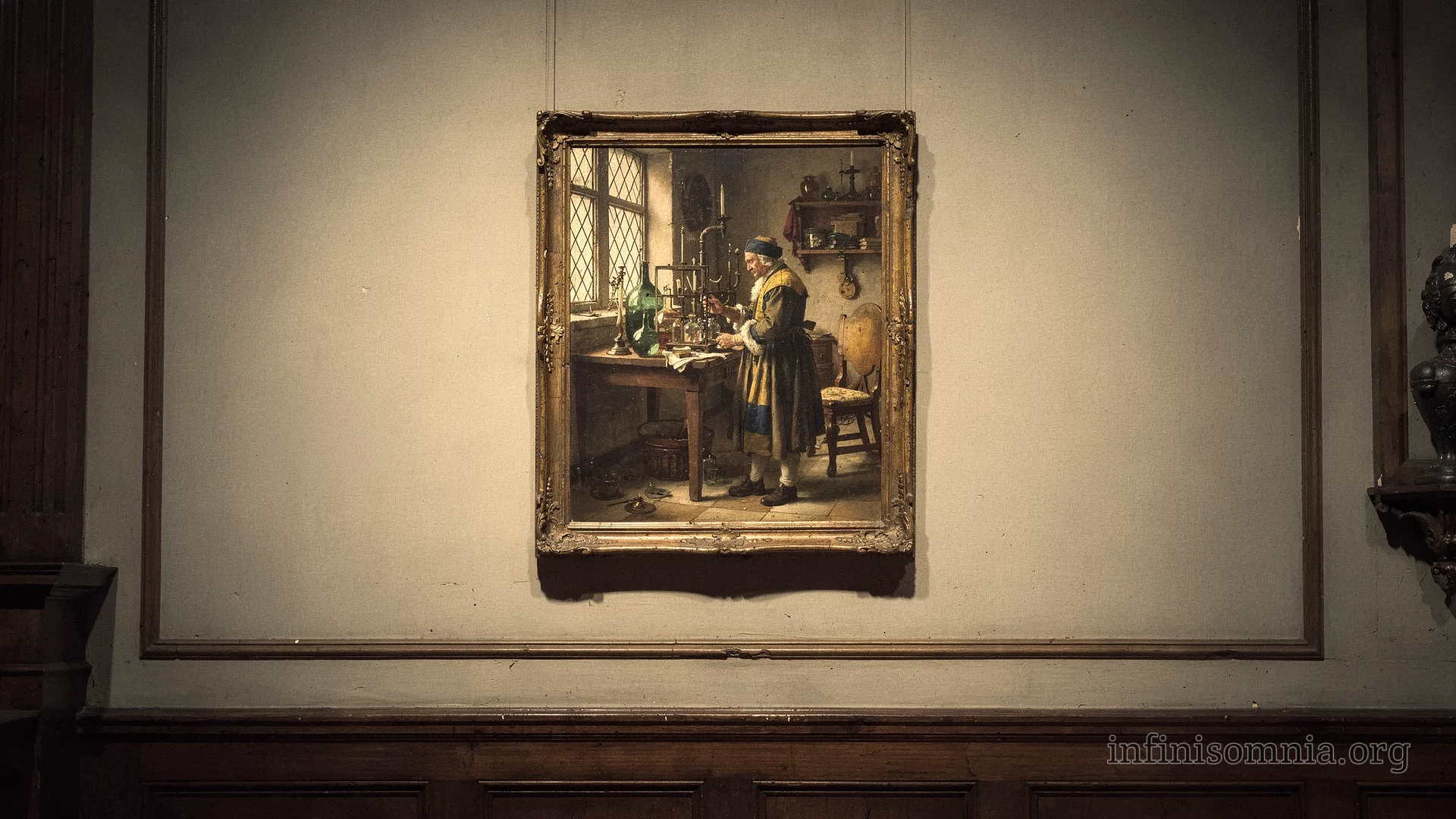
He insured a painting by Vermeer that was supposed to be exhibited in London. But during transport from the docks to the museum, it vanished as if by magic.
Their first lead points to a well-known thief whose speciality is breaking into the most highly protected places.
The case is going smoothly, or so it seems. Too smoothly?
The Setting
This time, the setting, namely Victorian London, was the crystallisation point for the entire episode. I wanted a story that feels like Sherlock Holmes.
The research was correspondingly extensive. I read about the various carriages, found a website with old maps, and learned about the Temperance Bar and the Chophouse.
Miray’s observation that post was delivered up to twelve times a day in Victorian London is also based on facts. There were complaints if a letter was not delivered within two hours.
I already knew about The Monument. However, the fact that the column was originally also used for solar observation was new to me.
Regarding Johannes Vermeer: At the time, he was actually only known in art circles. To increase the suspense a little as to whether the painting would be recovered or not, I opted for a fictional work. The Alchemist fits in with The Astronomer and The Geographer in Vermeer’s series of the sciences.
I allowed myself one small error here. At around 51 × 45 cm, the two existing paintings would be much too large for the trick by which the Alchemist disappeared. The fictional work, with its significantly smaller format, is therefore an outlier in the series.
The Characters
Miray and Dian are partners in a detective agency that bears Miray’s name. This causes plenty of confusion and conflict, as independent women were rather unusual in Victorian London. And Miray is independent. Very independent.
Inspector Leblanc is, of course, an allusion to Inspector Lestrade, who regularly assisted Holmes. I liked the name mostly because of its reference to Maurice Leblanc, the author of the famous master thief Arsène Lupin, also a classic amongst crime novels.
Dian’s Dream
Dian’s dream scene is nice, but it doesn’t advance the plot one bit. An editor would probably demand its removal, if I had one. I’d be inclined to agree.
Why is the scene in there anyway?
It is a reminiscence of earlier attempts to get this episode off the ground. In those, Miray called herself Sherlocka Swift, and her faithful companion was Dr. Dian Hilton, actually conceived as a Doctor of Botany.
I wrote the dream scene in the present tense. It was an experiment, and I was afraid it would pull the reader out of the flow of reading. But the feedback was overwhelmingly positive. The dream within a dream stands out because of it.
The Dream World
Dian wants to find out something this time.
He has known since The Great Trampera that he cannot meet Miray outside of his dreams. However, that doesn’t answer his question as to whether the dream worlds themselves are imaginary, or if he is actually undertaking journeys to other times and strange places.
So he carves something into a stone of The Monument, in the hope of having changed his present by doing so. Sadly, without success.
What have I learnt?
For the first time, Dian is an unreliable narrator. Meaning: he lies to the reader. It doesn’t matter whether it’s intentional or unintentional.
Here, it’s intentional. In the showdown, he names the supposed culprit, only to subsequently admit that he was wrong. Since he narrates in the past tense, he must have already known this when he wrote the story down. Nevertheless, he initially names the wrong culprit.
The reader usually forgives this trick, and is rewarded for it with a further plot twist.
Spoiler Alert: This article reveals plot details. If you aren't familiar with the work yet, you should probably stop reading now.
In Kiona Bluff, Miray took on the role of the narrator, and Dian missed out. I promised to make amends.
I always wanted to write a story that leans atmospherically towards film noir. However, this short novel isn’t exactly typical for the genre and deliberately breaks with as many clichés as possible.
The narrative desperately wants to sound like Raymond Chandler, and Dian desperately wants to be a second Philip Marlowe.
But the spark just doesn’t ignite, because there’s always something that doesn’t quite fit. The femme fatale is a man. Dian’s cool moment is thwarted by a bloke in his underpants on the balcony opposite. The contact in Istanbul doesn’t even want to hear the important passphrase. And Dian’s cigarette substitute makes his fingers, clothes, and the furniture sticky.
It’s only when Dian meets Miray that he starts to find his own voice again. His final attempt to imitate Marlowe ends abruptly when, after a lavish meal, he offers Miray that cigarette substitute and she promptly refuses. “Whatever that is,” she says, “you should quit it.”
The Plot
Dian wakes up in a detective agency. Two lines on his wrist, but no sign of Miray.
Instead, a client stands in the doorway, a secret agent who hires Dian to bring a suitcase from Turkey to València.
How hard can that be, Dian thinks to himself. He plunges into the adventure alone and brings the suitcase into the country. Without any problems, or so it seems at first. He only realises there’s more to it when the handcuffs click.
The Setting
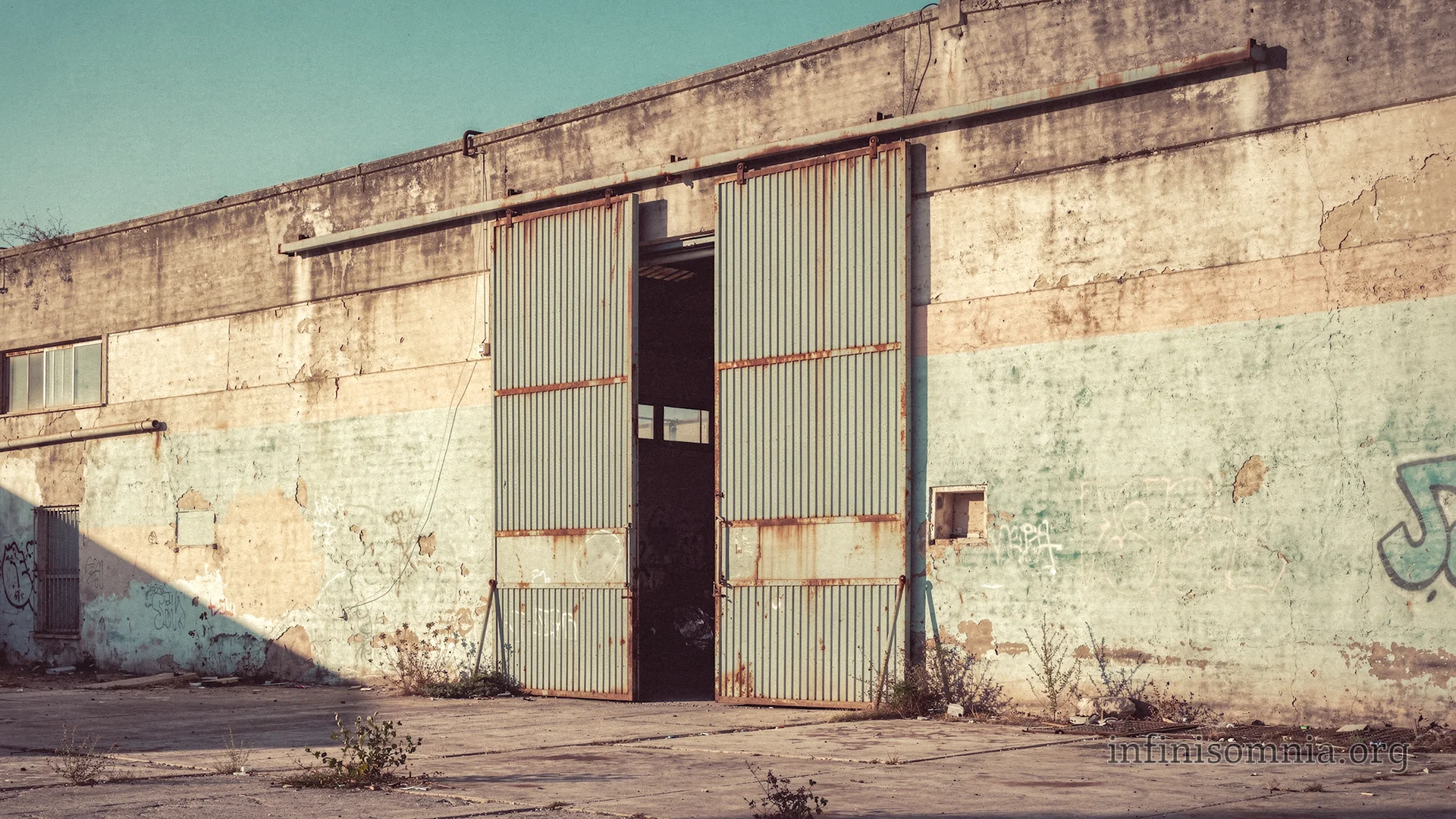
I needed a city with Mediterranean flair, an international airport, and a port district. A city that – entirely contrary to the film noir cliché – isn’t ugly, dreary, and constantly raining, but quite the opposite.
My choice initially fell on Barcelona. But there was a problem: in film noir, people smoke. They have to smoke. Nobody would take a detective without a fag in his mouth seriously.
However, Dian doesn’t smoke. He needs another vice. That’s where Turrón de Jijona comes into play, a sticky bar made of almonds, honey, and sugar. And those are more popular in Valencia. I hope you’ll forgive me that it’s actually a typical Christmas treat.
And so the episode moved to Valencia. Originally, I even planned a showdown in the Museu de les Ciències, but the plot didn’t allow for it without too much contortion.
The Characters
As is typical for film noir, I’ve presented a colourful and very diverse bunch of characters.
Dian is the typical hard-boiled detective this time. Only he is anything but hard-boiled. Whenever he tries to take control, he fails because of himself or the circumstances.
His secretary is Clara Torbellina Montserrat. The person in the background who holds the place together.
The client? This time it’s not the obligatory femme fatale, but the opposite: an alpha male who tells Dian what to do.
And of course, there needs to be a cop. The role is tailor-made for Miray, isn’t it? She also finds her feet in it surprisingly quickly.
I really enjoyed Señor Civera. A conspiracy theorist who can claim to be the first to have ruffled the feathers of the otherwise self-controlled Miray.
The Dream World
There isn’t much new here regarding the mechanics of the dream worlds.
At most: Except perhaps for Tear of the Desert, Dian and Miray have so far found each other relatively easily in their dream journeys. In Tapas in València, they had to actively go searching for the first time. Would the dating agency have actually helped there?
What have I learned?
Less about writing style, more about plotting. Tapas in València was actually the first story that didn’t crystallise from individual scenes.
Instead, this time I drafted a complete plot first before I started telling the story itself. One difficulty with a controlled narrative style is that it offers the characters less room for improvisation and “stifles” their personality if you overdo it. The key here is to guide them along the plot, but to give them enough freedom within the scenes.
Sounds weird? As if the characters were alive, refusing to shoot certain scenes like an overpaid film star?
I’ve heard that this happens to many authors. That the characters develop a life of their own and sometimes just do their own thing. Well, it’s actually true.
I learned the hard way that they can even boycott entire episodes. More on that in the next making-of.
Spoiler Alert: This article reveals plot details. If you aren't familiar with the work yet, you should probably stop reading now.
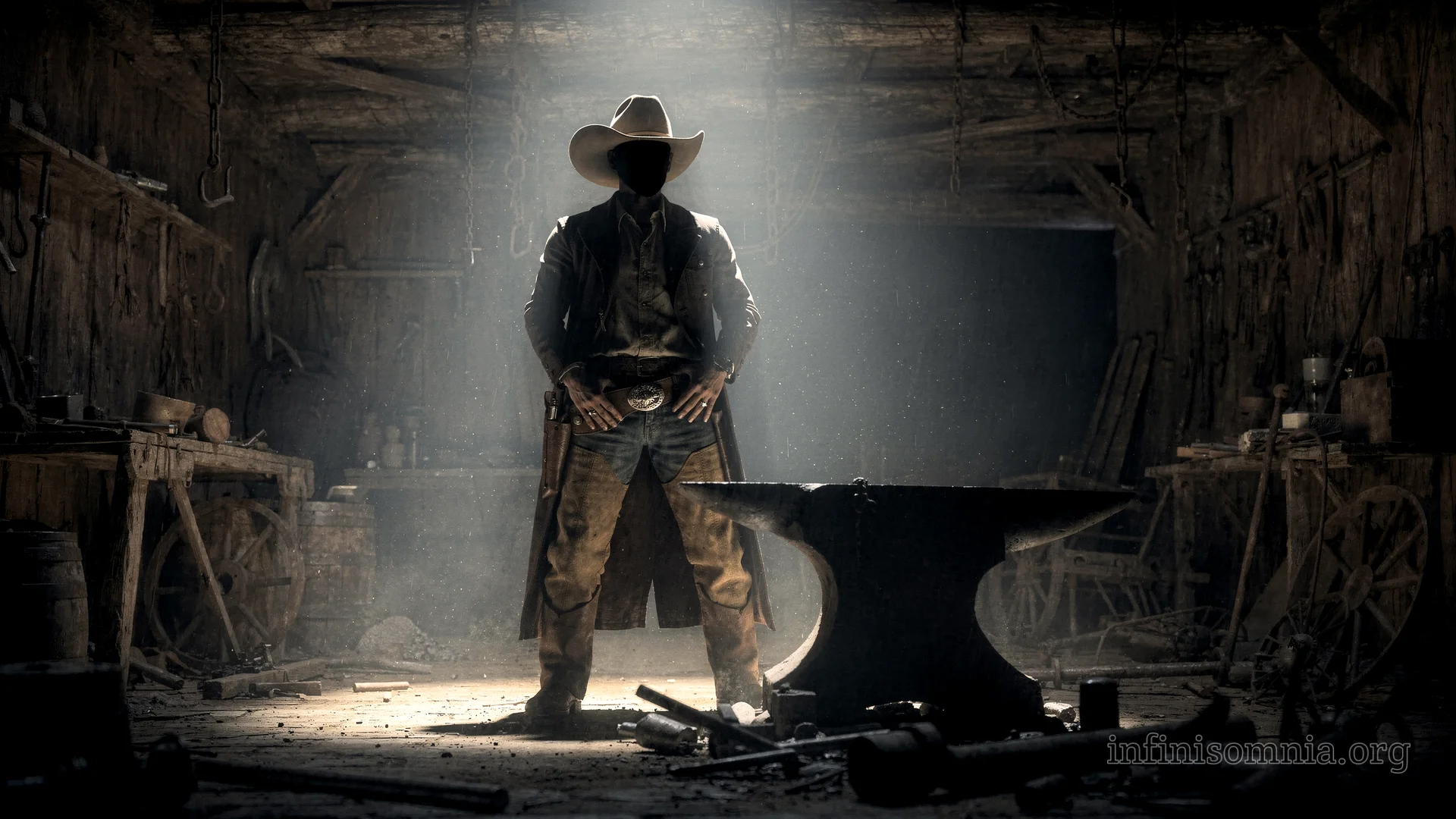
Strictly speaking, the idea for this episode wasn’t mine at all, but Miray’s. Even though my characters have to follow the plot, I usually give them a long leash in the scenes and allow them the freedom to improvise. In this case, Miray and Dian were sitting in a teahouse with time to kill. Suddenly, Miray mentioned a previous dream set in the Wild West. She didn’t want to go into any more detail. All she would reveal was this: it ended in a wild shootout.
The episode with the tea house remained unfinished. Her idea with the Wild West survived, however, and became the foundation for this story. There is also a shoot-out in the showdown, as is fitting for a Western. Albeit with a special twist that I will not reveal at this point.
The Plot
Miray uses the moment of a romantic candlelit dinner with Dian to tell him about her adventure in Kiona Bluff.
In a previous dream, even before she met Dian, she ended up in this one-horse town in the Wild West. Her task: catch a crook. He has the reputation that his shots have never missed their target. Miray only possesses one weapon: her mind. But this weapon is no less dangerous.
The Setting
This time we have two settings at once.
The frame narrative takes place in a fictional fine-dining restaurant in present-day Dubai. The fantastic view over the city and the excellent food make the evening so perfect that, in the end, Miray actually lets herself get carried away into a brief moment of weakness.
The main plot, on the other hand, takes place in the classic Wild West. The fictional name of the small town Kiona Bluff is not chosen at random. “Kiona” is an indigenous word meaning “brown hill”. “Bluff” has an intentional double meaning. On the one hand, a desert cliff is called a “bluff” in English. On the other hand, bluffing – that is, deceiving one’s opponent – is a central component of this story.
I must admit that the great era of Western films completely passed me by. Accordingly, I had to do a lot of research, for example on stagecoaches or typical women’s clothing.
Miray’s one-handed riffle shuffle and Pepper’s ghost also come from this research.
The Characters
For the main story, Miray takes on the role of the narrator this time. Dian is left with only the significantly smaller part as the narrator of the frame narrative. I’ll make it up to you, Dian. Promise.
In the Western world, I tried to give the characters more depth than usual. Especially the smart farm boy Cal was a lot of fun for me to write. Which little boy was the inspiration here should be obvious.
Just as much fun was the antagonist Bullet Ben, who is undoubtedly better at handling his shooting iron than with words. (By the way, I’ve hidden a small reference to a famous computer game from 1990 with him. Have fun searching.)
The Dream World
This episode doesn’t reveal much that’s new about the mechanics of the dream worlds. Really only that there are also dream journeys that start with a green circle, meaning they can be left immediately.
What have I learnt?
Frame narratives galore. And here I would like to be praised for my courage (or rather madness?), because this episode actually has not one or two, but a whopping four narrative levels.
- Dian’s reality: He falls asleep on a sunbathing lawn at the outdoor pool.
- The actual dream journey: The romantic dinner with Miray in the Burj al Sahar.
- Miray’s adventure in Kiona Bluff, including the switch to Miray as the first-person narrator.
- The duel between Bullet Ben and the mysterious cowboy. Here, the narrative perspective changes once again, namely to an omniscient narrator.
In general, I’ve learnt that the constellation of a heroine and a narrating companion has a serious disadvantage. Narratively speaking, it’s very difficult to let Miray do something on her own for once. Dian always has to be there, otherwise he can’t know what happened and consequently can’t tell about it. Or I use the trick of switching narrators, but if I overdo it, my esteemed readers will eventually lose track.
The first-person perspective is usually easier for those starting out with creative writing, as we also think in the first person. Initially, I even assumed that the first-person and omniscient perspectives were basically interchangeable at will, and were more or less limited to a change in personal pronouns.
I know better now. But that is also the actual goal of my journey as an amateur writer: making mistakes, learning from them, and having fun in the process.
Spoiler Alert: This article reveals plot details. If you aren't familiar with the work yet, you should probably stop reading now.

The Plot
Miray and Dian find themselves in the role of siblings this time. Their mother, Amanda Brown, is a Hollywood celebrity. And she is furious. The famous Johnny Trampera is celebrating the completion of his new luxury villa in Malibu, and Amanda is not invited.
She tasks her two children with securing an invitation. But that won’t be their only task. A third stroke on the tattoo reveals that there is a third dream traveller. If they want to make it through the adventure, they have to find this third person.
The Setting
A film diva – what could be more fitting than choosing modern-day San Francisco as the setting for the episode? Amanda Brown lives with her two children in a villa in Los Angeles.
Trampera, on the other hand, naturally had his pompous luxury villa built in no lesser place than Malibu, specifically on the (fictional) Pacific Crest Drive.
The adventure offers everything that makes a spontaneous trip to the USA: sunny weather, refreshing pools, beach cafés, and drives in a classic convertible.
The Characters
Dian and Miray are siblings in this world. To their surprise, they even find evidence of this in the form of photos from their childhood.
New is the third dream traveller Felisha, called “Lish” for short. She is the opposite of Miray: acts impulsively before thinking about the consequences. Naturally, this creates tension between the two women. This constellation elegantly allows me to pass the Bechdel test. 😊
I also had fun developing the roles of the life-frustrated café owner Alfred (inspired by Al Bundy) and the incorruptible majordomo Hopkins (naturally an homage to the unique Jonathan Quayle Higgins).
And Johnny Trampera, the eponymous hero? Well, he is a MacGuffin, as is proper for a Hollywood story. Besides: Trampera… Travolta… You understand? 😂
The Dream World
For the dream worlds, this episode brought several major realisations.
Firstly: Lish. Miray was initially alone until she met Dian in Tear of the Desert. In this episode, a third dream traveller joins in.
Secondly: The childhood pictures of Dian and Miray, which actually shouldn’t exist at all, since both didn’t have a shared childhood. Their alter egos from the dream worlds thus seem to possess a past of their own.
Thirdly: Once the adventure is solved, you cannot linger in the dream world indefinitely. Whoever falls asleep there wakes up back at home.
But probably the most important (and for Dian, the most bitter) realisation is that he cannot meet Miray in his own world. She seems to be nothing more than a figment of his dreams.
Or he of hers?
What have I learnt?
Actually, not too much new about the craft of writing.
This episode served more to further consolidate my new writing style, which I developed in Deceptive Appearances.
Spoiler Alert: This article reveals plot details. If you aren't familiar with the work yet, you should probably stop reading now.
In this story, I’m playing with expectations and clichés. But it also serves another purpose: it develops the overarching story arc. We get to know a new side of Miray and experience the two characters growing closer together.
The Plot
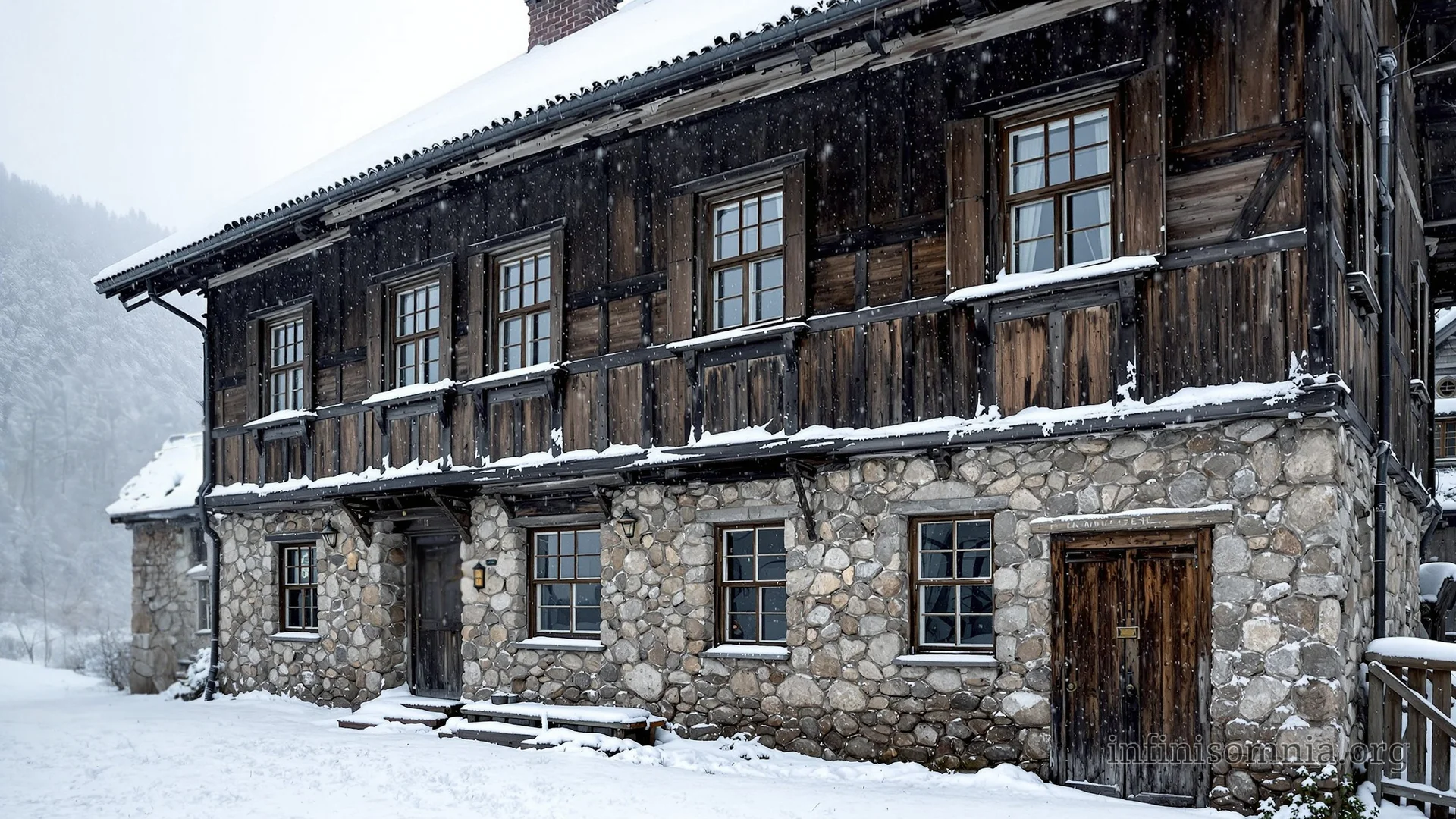
Miray and Dian find themselves in a small village, somewhere in deepest Romania. A Count’s letter brought them to this desolate place. A young woman from the village has disappeared, and the Count now fears the worst for himself and his castle.
While searching for the woman, our adventurers get to know the people in the village better, as well as each other.
The Setting
It probably goes without saying that the film The Fearless Vampire Killers by Roman Polanski was the inspiration for this episode. The story told is, of course, completely different, but the atmosphere of the village tavern, the deeply snow-covered landscape and the Count’s castle all found their inspiration in this film.
However, one scene has been haunting my mind since I started the project: it is the scene in which Dian steps out of the stuffy and overheated taproom into the cold hallway to check on Miray. Where I would include this scene, and what reason Dian might have, only became clear to me when I wrote this episode.
I think the intense, threatening atmosphere, which begins when Miray asks about the Dark Castle and culminates in the visit to this castle, turned out particularly well. I am proud of the result, even if a professional author would certainly have got more out of it.
The Characters
Dian and Miray are described in this dream journey as “capable investigators”, without this being elaborated on.
Facing them are three irreconcilable parties: the landlord Alexandru with his family and Florica as an employee, the blacksmith Constantin, and finally the Count with his loyal servant.
With the Count, the name allusion to a contemporary person is quite obvious. The name of his servant found a similar inspiration, but I won’t reveal any more than that. 😉
The Dream World
There are no new insights into the mechanics of the dream worlds in this episode.
What have I learnt?
At first it looked like the usual routine that had set in in the meantime. I had written the episode through, proofread it multiple times, refined it. It was about to be published; I had even announced it.
Then I read the book “Deutsch für junge Profis” [German for Young Professionals] by Wolf Schneider. His tips on good writing style and sentence structure were a real eye-opener. Where previously I only sensed that “something wasn’t right” with a sentence, I now recognised where the problem lay and how I could improve it. 1
As a result, I completely overhauled the entire story once again. I improved the sentence structure, expanded the scene transitions and made sure to describe the characters’ actions better. This extensive change cost me two months. But it brought the story from 8,000 to over 10,000 words, which also read much more fluently. I think the result was worth the effort – and the wait.
While I was writing the following episodes, I noticed that my writing style was undergoing a major change. On the one hand, this unsettled me, because I suddenly had to rethink a lot of things that I had previously jotted down and considered good. It felt like a step backwards on the way to finding and sharpening my personal writing style.
On the other hand, there is nothing bad about steps backwards if you take a better path forward afterwards.
Unfortunately, the book “Deutsch für junge Profis” is also a badly aged diatribe against blogging. It’s a pity that the author thought this was necessary. It ultimately spoilt my enjoyment of an otherwise readable book. I never finished reading it. ↩︎