Spoiler Alert: This article reveals plot details. If you aren't familiar with the work yet, you should probably stop reading now.
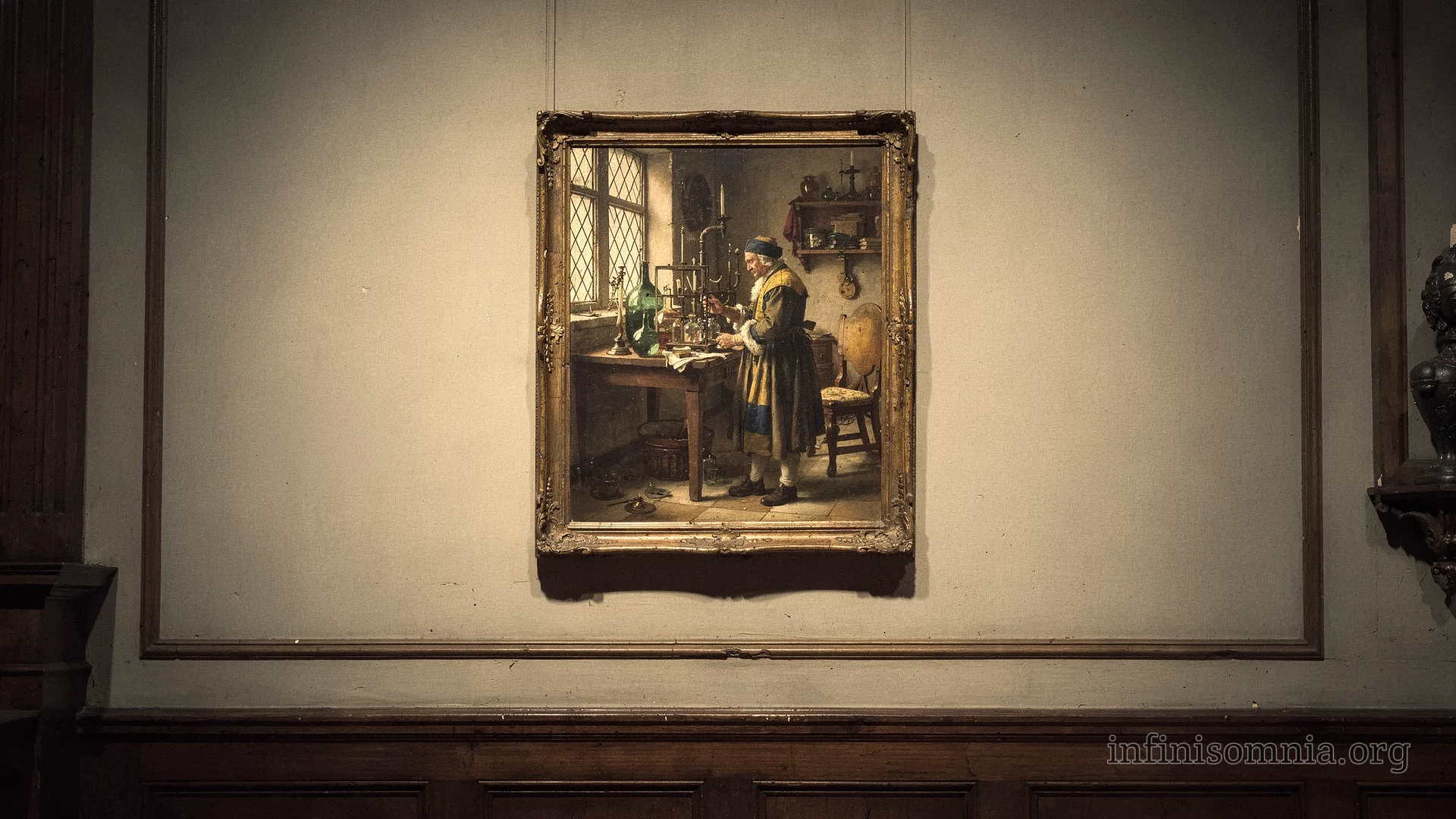
This episode was a massive undertaking. It was originally supposed to be the second episode of the series. In the end, it became number seven.
I am a huge fan of Sherlock Holmes, and indeed a lot of inspiration from it went into this project, starting with Dian as the narrator (like Doctor Watson) and Miray as the mysterious heroine (like Sherlock Holmes).
So what could be more obvious than setting a detective episode in Victorian London?
I had expected a lot of things. What I didn’t expect was that my main characters would boycott the story.
The episode presented here is the fourth attempt. There are actually three other versions, all more or less fully written. In one, a thief returned an item instead of stealing it. In another, a statue disappeared without a trace from a museum right before the cleaner’s eyes. In yet another, a painting also vanished as if by magic – but no one could be found who had a good motive.
Only this fourth attempt here succeeded. Because only now did I understand what made the previous attempts fail.
It wasn’t the plot. The ideas were good and had potential.
It was that I desperately wanted to force Miray and Dian into the roles of Holmes and Watson. I wanted to create an imitation of Doyle’s stories. My characters fought against it. They acted unmotivated, colourless, moody.
Only when I let them be themselves again did it finally work.
The Plot
Miray runs a detective agency in Victorian London; Dian is her partner. They receive a visit from Mr Wellington, the owner of an insurance company.
He insured a painting by Vermeer that was supposed to be exhibited in London. But during transport from the docks to the museum, it vanished as if by magic.
Their first lead points to a well-known thief whose speciality is breaking into the most highly protected places.
The case is going smoothly, or so it seems. Too smoothly?
The Setting
This time, the setting, namely Victorian London, was the crystallisation point for the entire episode. I wanted a story that feels like Sherlock Holmes.
The research was correspondingly extensive. I read about the various carriages, found a website with old maps, and learned about the Temperance Bar and the Chophouse.
Miray’s observation that post was delivered up to twelve times a day in Victorian London is also based on facts. There were complaints if a letter was not delivered within two hours.
I already knew about The Monument. However, the fact that the column was originally also used for solar observation was new to me.
Regarding Johannes Vermeer: At the time, he was actually only known in art circles. To increase the suspense a little as to whether the painting would be recovered or not, I opted for a fictional work. The Alchemist fits in with The Astronomer and The Geographer in Vermeer’s series of the sciences.
I allowed myself one small error here. At around 51 × 45 cm, the two existing paintings would be much too large for the trick by which the Alchemist disappeared. The fictional work, with its significantly smaller format, is therefore an outlier in the series.
The Characters
Miray and Dian are partners in a detective agency that bears Miray’s name. This causes plenty of confusion and conflict, as independent women were rather unusual in Victorian London. And Miray is independent. Very independent.
Inspector Leblanc is, of course, an allusion to Inspector Lestrade, who regularly assisted Holmes. I liked the name mostly because of its reference to Maurice Leblanc, the author of the famous master thief Arsène Lupin, also a classic amongst crime novels.
Dian’s Dream
Dian’s dream scene is nice, but it doesn’t advance the plot one bit. An editor would probably demand its removal, if I had one. I’d be inclined to agree.
Why is the scene in there anyway?
It is a reminiscence of earlier attempts to get this episode off the ground. In those, Miray called herself Sherlocka Swift, and her faithful companion was Dr. Dian Hilton, actually conceived as a Doctor of Botany.
I wrote the dream scene in the present tense. It was an experiment, and I was afraid it would pull the reader out of the flow of reading. But the feedback was overwhelmingly positive. The dream within a dream stands out because of it.
The Dream World
Dian wants to find out something this time.
He has known since The Great Trampera that he cannot meet Miray outside of his dreams. However, that doesn’t answer his question as to whether the dream worlds themselves are imaginary, or if he is actually undertaking journeys to other times and strange places.
So he carves something into a stone of The Monument, in the hope of having changed his present by doing so. Sadly, without success.
What have I learnt?
For the first time, Dian is an unreliable narrator. Meaning: he lies to the reader. It doesn’t matter whether it’s intentional or unintentional.
Here, it’s intentional. In the showdown, he names the supposed culprit, only to subsequently admit that he was wrong. Since he narrates in the past tense, he must have already known this when he wrote the story down. Nevertheless, he initially names the wrong culprit.
The reader usually forgives this trick, and is rewarded for it with a further plot twist.