10 years ago the time had come: shredzone.de went online! Today I am proud that I managed to put my new blog online just in time for the anniversary.

The content of my old homepage - especially the photo gallery - will gradually move over to my new site.
Have fun on the new Shredzone!
PS: Until the Captcha system is finished, I will be moderating all new comments for now. Please be a little patient until your comment is approved.
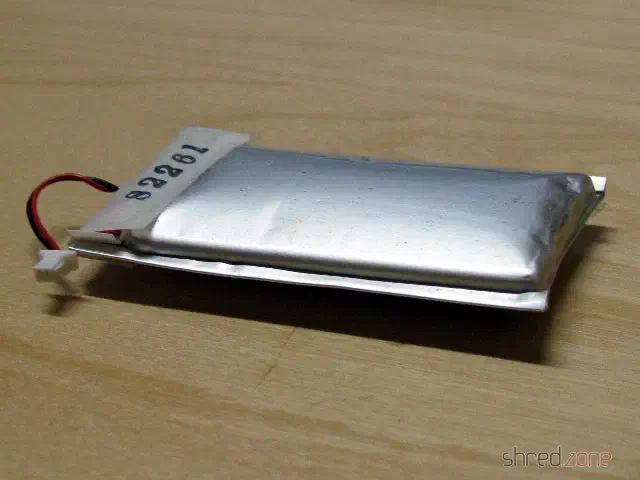
I have the faint impression that this LiPo battery has died:
Hmmm… For a manufacturer who makes a big deal out of the quality of his power supplies, this is a rather sad picture:
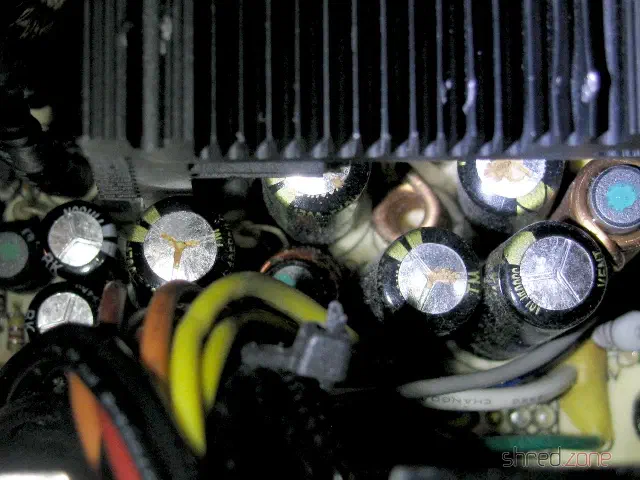
All capacitors on the photo are bulged or have leaked. I had two power supplies of this brand in the upper price range. Both failed shortly after the warranty ended. At least it was a well-invested lesson.

I would like to take this opportunity to offer my very personal congratulations to the Amiga. No computer has shaped me as much as it has.
I was already enthusiastic about computers as a 10-year-old lad. Even back then, I used to pester my primary school teacher with questions about calculating trigonometric functions using Taylor series, and in year four I already knew the basics of BASIC before I even learned my first foreign language.
Then I saw an Amiga 1000 for the first time on television (in a computer programme on a public service channel). The graphics and sound capabilities were almost unbelievable for the time, and at first I actually looked for the catch, for example, that you were only allowed to run an Amiga for a few hours because it would otherwise overheat.
But of course that wasn’t the case, as I was able to see for myself a short time later. A classmate got an Amiga 500, and I stared in amazement at colourful games and groovy demos with real music instead of the C64 synth-doodling - and was green with envy.
I started to badger my parents, and in 1988 I actually got my own Amiga 500 as a gift at the age of 16. I devoured the mandatory reading of the time, the legendary Amiga Intern by Data Becker, in a week, with the 68000 assembler instruction set for dessert. Even before I had my Amiga, I knew how the miracle box worked.
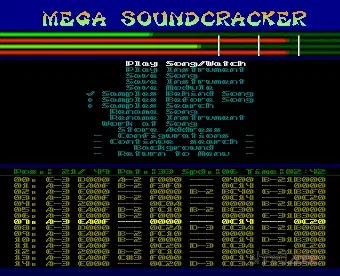
Then came Kickstart 2.0, and with it the belated realisation that the operating system perhaps wasn’t so useless after all. Because back then, many games and demos no longer worked because they didn’t adhere to Commodore’s programming guidelines. However, the dealers blamed the Amiga and drove away quite a few customers with this false statement.
Since the new Kickstart, I occupied myself with the Amiga operating system - and found something that is still modern even by today’s standards. Pre-emptive multitasking, for example, memory and resource management, or numerous ready-made program libraries that just wanted to be used. The already market-dominating Windows 3.1 looked outdated in comparison, and even Windows 95 didn’t come close to its capabilities. AmigaOS is very comparable to Unix. The similarities are so great that text-based Unix programs could even be compiled relatively easily on the Amiga.
Eventually the Amiga 500 became too small for me, and in 1994 I bought an Amiga 4000 with my hard-earned civilian service pay. My work there moved more behind the scenes. I did try to write one or two application programs, even successfully with EuraTools and SoundBox, but mostly I worked on libraries.
I am particularly proud of the maestix.library. Unfortunately, the manufacturer did not provide drivers for the MaestroPro sound card (with optical inputs and outputs, revolutionary at the time). I annoyed the developers at Amiga trade fairs, but was always just fobbed off or chased away. So I sat down and programmed a driver myself. It worked efficiently and stably - and so well that one day I even got a call from the manufacturer asking if I would like to program for them.
Commodore’s bankruptcy in 1994 hit me hard, but in itself it was foreseeable for me anyway, because Commodore committed one management error after another back then. Finished construction plans for a new Amiga chipset vanished into a drawer, and they stubbornly refused to advertise the Amiga despite declining sales figures. They themselves saw the Amiga as merely a C64 successor that was promoted solely through word of mouth. Commodore underestimated the computer’s capabilities, and their attitude was not least responsible for the fact that the Amiga was always burdened with the stigma of being a “games computer”. Ironically, Windows, for which most games are available today, was considered a serious alternative at the time.
Despite the bankruptcy, I remained loyal to the Amiga, following the exciting years that followed with their highs and lows. The purchase by Escom, new Amigas were developed, then Escom also went bankrupt. Gateway was the next to take pity, then put Amiga on its own two feet.
The time that followed, however, was a tragedy. Companies like Haage&Partner, Phase 5 and Amiga tore each other apart in competition for the next Amiga generation, and lost sight of the common goal due to their petty wars. One consequence was that Amiga models were often announced and then vanished into thin air again.
At that time, my Amiga 4000 was already highly upgraded, housed in a huge tower case and had numerous expansion cards in its belly. But nevertheless, what had to happen happened: the PC visibly caught up and eventually overtook it in terms of graphics, sound and computing power. Linux came onto the market and increasingly established itself as a genuine alternative to Windows.
In the year 2000 I then decided to give up the Amiga. The decision wasn’t easy, but an old Native American proverb says: when you discover that you are riding a dead horse, dismount.
I am now quite happy with Linux, as a lot of things remind me of the Amiga. The Amiga emulator UAE has also become powerful enough on modern computers to emulate even demanding nostalgia trips.
My Amiga 4000 is now back in its desktop case under the desk. It has earned its place of honour.
Happy Birthday, Amiga!
Rest in peace, Amiga!

The Recipe
If you ask a Bajan for the recipe for the punch, they will recite the following rhyme:
One of sour,
Two of sweet,
Three of strong,
Four of weak.
The recipe for one glass accordingly looks like this:
- 1 cl lime juice (ideally freshly squeezed)
- 2 cl simple syrup (see below)
- 3 cl dark Barbados rum
- 4 cl water
Mix the ingredients thoroughly and pour them into a glass with plenty of coarsely crushed ice. Then add
- a few dashes of Angostura and
- some freshly grated nutmeg
And the refreshment is ready! 😃
Simple Syrup
Simple syrup is a part of the recipe, but is also commonly used for other cocktails. It is simply sugar syrup. You can buy it ready-made in the supermarket, but you can also easily make it yourself.
Carefully bring a cup of water and two cups of cane sugar to the boil in a pan on the stove. Stir continuously until the sugar has completely dissolved. The sugar must not caramelise, the syrup should be light and clear at the end. Due to the high sugar content, the syrup becomes very hot, so be careful not to burn yourself!
Let the syrup cool down and then pour it into a bottle using a funnel. It will keep for several weeks in the fridge.
The Rum
Naturally, the Rum Punch tastes best with an original Barbados rum. In Barbados, you can find a good local rum in any supermarket for very little money. It doesn’t taste as harsh as the types of rum you usually get in the supermarket here, but rather aromatic and slightly sweet.
Unfortunately, good Barbados rum is not so easy to get hold of here, but you should be able to find an affordable variety in a specialist spirit shop.
In a pinch, you can of course use any other dark rum. It just won’t taste quite as good. 😉